Logo
AI & Digital Transformation

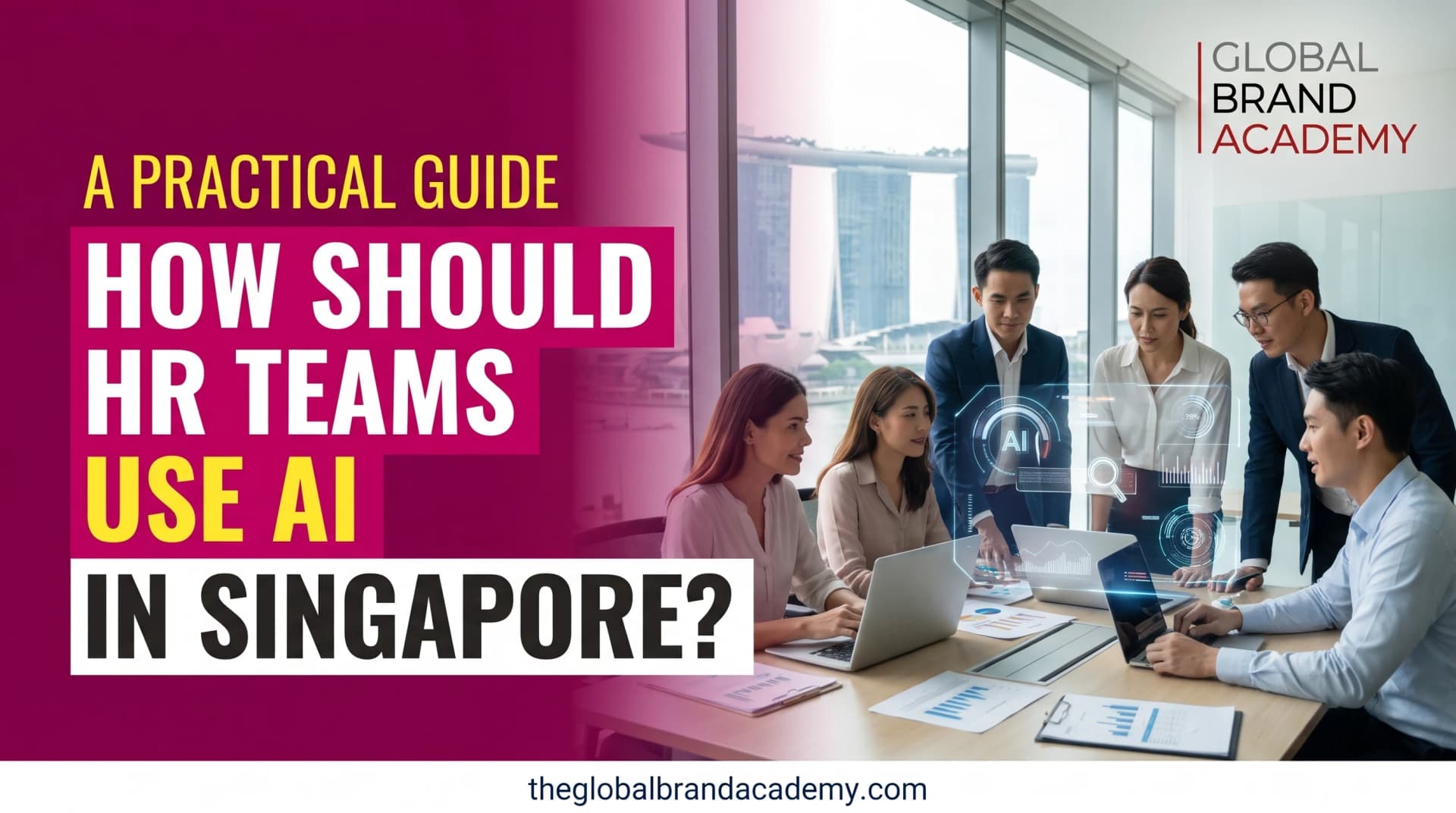
How Should HR Teams Use AI in Singapore? A Practical Guide

Published on October 29, 2026By Team Dr. Jerome Joseph
How Should HR Teams Use AI in Singapore? A Practical Guide

How Should HR Teams Use AI in Singapore?

HR teams in Singapore can use AI to draft, schedule, summarise and suggest, but a person must make, and be able to explain, every hiring, promotion, pay and discipline decision. The Ministry of Manpower has said employers must follow the Tripartite Guidelines on Fair Employment Practices whatever tools they use. In practice that means three things: sort HR tasks by risk, keep a named reviewer on anything AI ranks or scores, and train your HR team before you roll anything out.

Last reviewed: 29 October 2026.

What Is AI in HR?

AI in HR is the use of software that learns from data to support people processes such as hiring, onboarding, employee queries, performance analysis and learning. It covers four kinds of work. Screening and matching. AI reads CVs, compares them with a role profile and produces a shortlist or ranking. This use attracts the most scrutiny. Answering and guiding. Chatbots handle routine questions about leave, payroll dates or onboarding documents. Analysing and predicting. Tools summarise engagement survey comments, flag attrition risk or spot patterns in performance data. Learning and development. AI helps map skills gaps and suggest learning paths.

How Many Singapore Employers Already Use AI in HR?

Most do. In a ManpowerGroup Employment Outlook Survey of 538 Singapore employers, reported in March 2026, 82% said they use AI in hiring, onboarding or training. The global average in the same survey was 67%.

Results lag behind adoption. Only 4% of Singapore employers say AI fully meets their expectations in hiring and training, and 10% report no positive return so far. Learning and development was the area where the largest share of employers (32%) reported a return, ahead of scheduling or forecasting (17%) and team performance (12%).

The survey also names what holds adoption back: privacy and regulatory concerns (16%), insufficient company training (13%) and employees' lack of AI skills (9%). None of these is a software problem. They are capability problems, which is the gap our AI training for corporate teams is designed to close. If you are still at the planning stage, our view on why compliance comes before capability when training staff on AI is a good place to begin.

Build practical AI skills in your HR and L&D teams.

Which HR Tasks Can AI Handle, and Which Should Stay With People?

Sort every HR task into one of three zones before any tool goes live. We suggest this as a ten-minute exercise for HR leads.

Zone

What AI does

Who decides

Typical tasks

Draft and assist

Produces a first version

HR reviews before it goes out

Job advertisement drafts, interview scheduling, policy FAQ answers, survey comment summaries

Suggest and review

Ranks, scores or flags

A named person decides and can explain why

CV shortlisting, performance summaries, attrition-risk flags

People only

Prepares information at most

A person decides and owns the outcome

Final hiring, promotion, pay, discipline and termination

The first zone is where teams see the quickest time savings, and our AI productivity training is built around this kind of everyday workflow. The second zone has one test: the person signing off must be able to explain the outcome in plain words to the candidate or employee. If nobody can say why one CV ranked above another, the tool is not ready for this zone. The third zone holds the decisions that change someone's livelihood, and they are the ones a regulator or an employee will ask about.

What Do Singapore's Rules Say About AI in Hiring and HR Decisions?

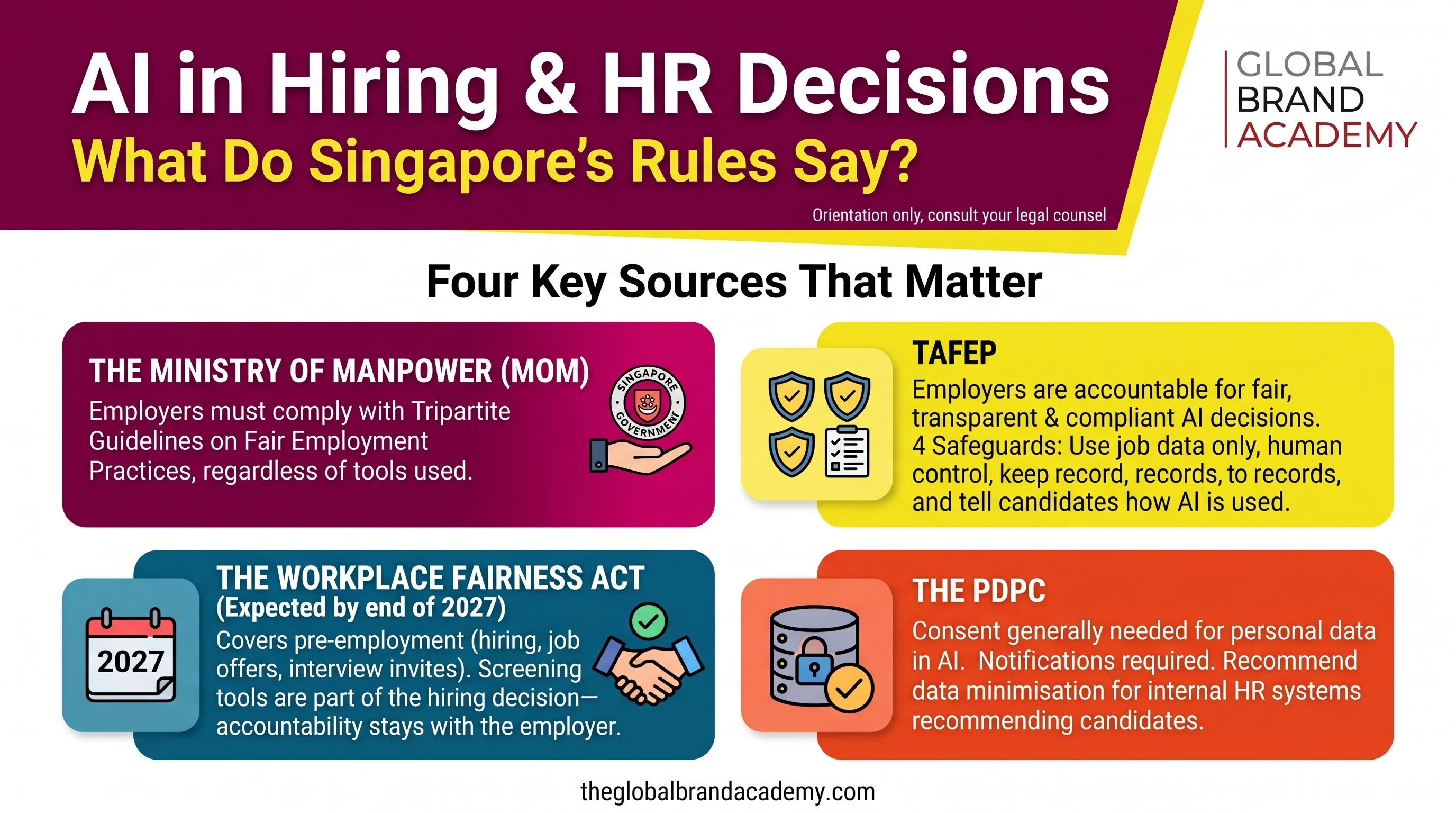
We are not lawyers, so treat this as orientation and confirm specifics with your own legal counsel. Four sources matter.

What Do Singapore's Rules Say About AI in Hiring and HR Decisions

The Ministry of Manpower. In a reply to Parliament on 13 November 2024, the Minister for Manpower said employers must comply with the Tripartite Guidelines on Fair Employment Practices regardless of the tools they use in hiring or promotion. The reply said TAFEP had received no complaints of discrimination arising from AI tools at that time, and that workers and applicants who face discrimination can seek help from TAFEP.

TAFEP. In its October 2025 article Fair Hiring First, AI Second, TAFEP says employers remain accountable for fair, transparent and compliant decisions when they use AI. It recommends four safeguards: use job-related data only, keep people in control of key stages and final decisions, keep records of decisions at each stage, and tell candidates in simple terms how AI is used, with a contact point for questions or appeals.

The Workplace Fairness Act. It is expected to take effect by the end of 2027 and covers pre-employment decisions such as hiring, job offers and interview invitations. TAFEP's article on the Act does not mention AI by name. In our view, a screening tool that decides who is invited to interview is part of that hiring decision, and accountability stays with the employer.

The PDPC. Its Advisory Guidelines on the Use of Personal Data in AI Recommendation and Decision Systems, issued on 1 March 2024, say consent is generally needed to collect and use personal data for AI-driven recommendations or decisions unless deemed consent or an exception applies, and that organisations must notify people of the purposes. The guidelines give "internal HR systems used to recommend potential job candidates" as an example where the Business Improvement Exception could be relevant, and they recommend data minimisation as good practice. Exceptions come with conditions, so take advice before relying on one.

What Should HR Ask an AI Vendor Before Signing?

Ask these five questions. They follow the safeguards TAFEP and the PDPC describe.

  1. What data was the tool trained on, and does it use our candidates' or employees' data to train itself further?

  2. Can it explain a ranking or score in plain terms that we can pass on to a candidate?

  3. Can we export a record of what happened at each decision stage?

  4. How are candidates and staff told that AI is involved, and who do they contact with questions or appeals?

  5. Where is personal data stored, for how long, and who can access it?

A vendor who cannot answer these clearly has already told you something useful.

Talk to our team about AI training for your organisation.

What Skills Does an HR Team Need Before Rolling Out AI?

Tools change every quarter. Skills carry over. We would build four. Framing the task. Good output starts with a clear brief covering the role, the context, the audience and the constraints. Vague requests produce vague results. Checking output. HR staff need to spot answers that sound confident but are wrong, and to notice when a shortlist leans the same way every time.

Explaining decisions. If AI played a part in a hiring or appraisal outcome, someone in HR has to describe that part clearly and calmly to the person affected.

Protecting personal data. HR staff should know what may go into a tool and what must not. As a rule, do not paste identifiable candidate or employee details into a public AI tool unless your organisation has approved it for that use.

None of this needs a technical background. It needs practice on real HR tasks. That is why our AI corporate training in Singapore uses examples from participants' own work, and why our AI training in Singapore programmes can be adapted to the needs of HR and L&D teams.

How Should You Start With AI in HR?

Start small and keep the order. Pick one task from the first zone, such as drafting job advertisements or answering policy questions. Write down who checks the output before it goes out. Train the people who will use the tool, not only the people who bought it. Tell candidates and employees when AI is involved. Then review after 90 days against one measure, such as hours saved, errors caught or candidate feedback.

The review step matters because early enthusiasm fades when nothing reinforces it. We describe this pattern in before you spend $50,000 on AI training, where adoption tends to slow within 90 days if nobody follows up.

If AI in HR is one part of a wider capability plan, our corporate training in Singapore page explains how we build programmes around your team's goals and needs. If you would like to talk it through, contact our team.

Frequently Asked Questions

What is AI in HR?

AI in HR is the use of software that learns from data to help with people tasks such as screening CVs, answering employee questions, summarising survey feedback and suggesting learning paths. It supports HR decisions. It does not replace the people accountable for them.

The Singapore guidance cited in this article does not ban it. Employers must still follow the Tripartite Guidelines on Fair Employment Practices whatever tools they use, and the Workplace Fairness Act is expected to take effect by the end of 2027. Confirm your specific setup with legal counsel.

What should employers tell candidates when AI is used in hiring?

TAFEP recommends explaining in simple terms what AI is used for, stating that people make the final decisions where appropriate, and giving a contact point for questions or appeals. The PDPC guidelines also expect organisations to notify people of the purposes for which their personal data is used.

Can AI replace HR staff?

Not in the decisions that matter most. AI can take on drafting, scheduling and first-pass analysis, but hiring, promotion, pay and discipline decisions need a person who can explain and own the outcome. HR roles shift toward judgement, oversight and communication.

What should HR ask an AI vendor?

Ask what data the tool was trained on, whether it can explain a ranking in plain terms, whether you can export decision records, how candidates are told that AI is involved, and where personal data is stored and for how long.

Do HR teams need AI training?

Yes. In the ManpowerGroup survey, insufficient company training (13%) and employees' lack of AI skills (9%) were named as barriers to wider AI adoption. Practical training on real HR tasks tends to help more than tool demos alone.

Dr. Jerome Joseph - Recognized #2 Global Brand Guru

Dr. Jerome Joseph

Singapore-Based Global Keynote Speaker | Corporate Trainer |
Brand & AI Expert

LinkedInX (Twitter)YouTubeSpotifyFacebookTikTok

Dr. Jerome Joseph is a Singapore-based global keynote speaker, corporate trainer, brand strategist, AI and business transformation expert, and best-selling author.

With more than 30 years of experience, he has worked with over 1,000 brands across 41 countries, helping leaders, organisations and professionals strengthen their brands, embrace AI and improve business performance.

Ranked No. 2 in the world as a Global Brand Thought Leader in 2020 and 2022, Dr. Jerome is a former CEO and Board Member of a publicly listed brand agency, the author of 14 books, a Certified Speaking Professional (CSP), Global Speaking Fellow (GSF), and the youngest inductee into the Asia Speaker Hall of Fame.

He delivers international keynotes, corporate training and advisory programmes in AI, sales, branding, personal branding, leadership and customer experience.

Explore Dr. Jerome Joseph's keynotes, training and advisory programmes at website.

GET IN TOUCH WITH GLOBAL BRAND ACADEMY

Connect with Global Brand Academy for training, transformation, or strategic support, and build capabilities across brand, leadership, culture, sales, customer experience, and AI while bridging learning with real-world performance.

HOW CAN WE HELP YOU?

Let's Collaborate to Inspire, Transform, and Elevate Your Event, Organisation or Team.

Singapore
+65

Related Posts