Logo
Brand Transformation

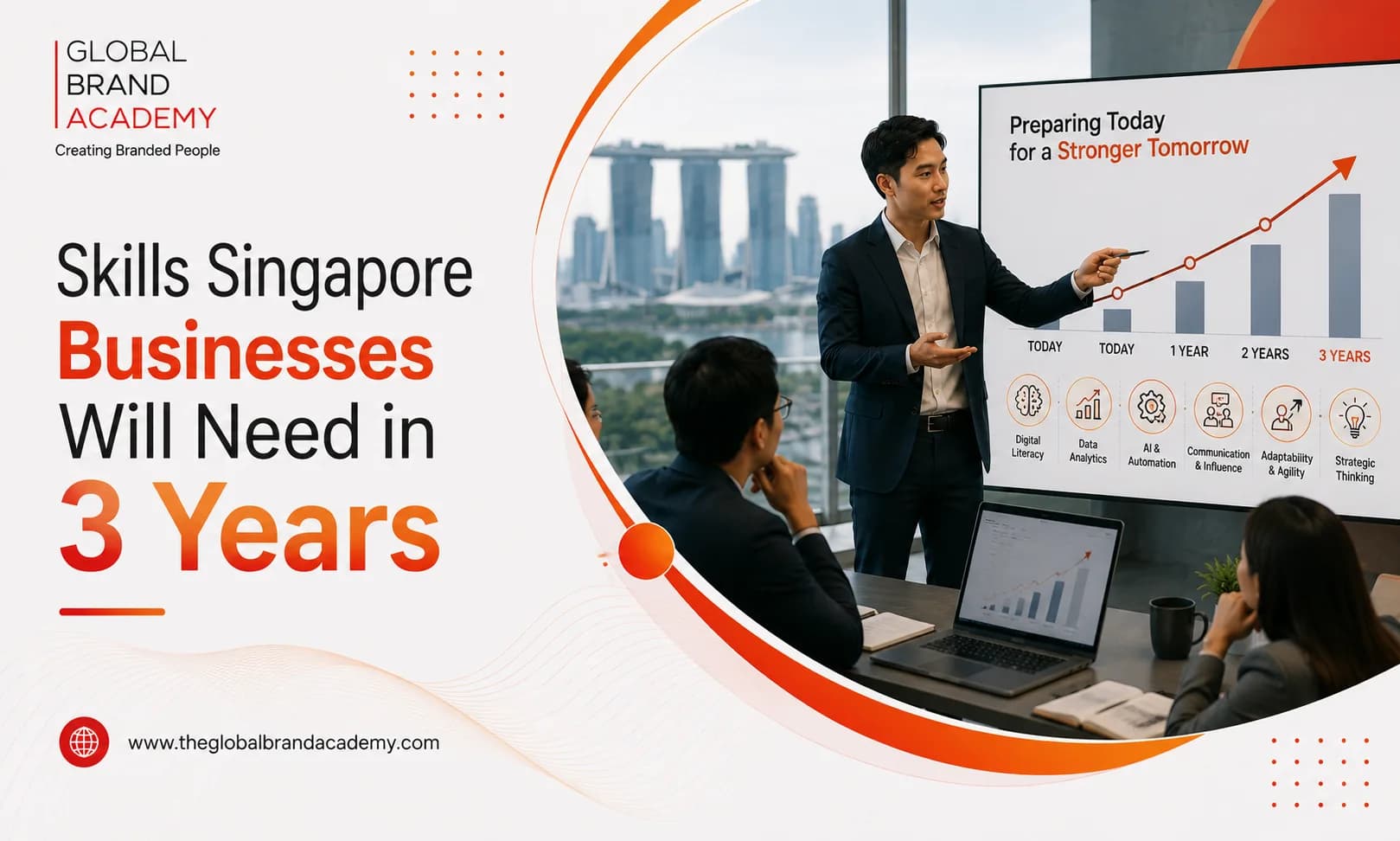
Skills Singapore Businesses Will Need in 3 Years

Published on August 27, 2026By Team Dr. Jerome Joseph
Skills Singapore Businesses Will Need in 3 Years

The Skills Gap Is Changing, Not Disappearing

For years, businesses could often solve a capability gap by hiring someone with the right qualification or several years of experience. That approach is becoming less reliable. The workplace is changing too quickly for companies to depend only on what employees already know. New technologies are changing everyday tasks, customers expect better experiences, teams are working across functions, and employees are increasingly expected to take on broader responsibilities.

For Singapore businesses, this creates a bigger question than simply asking whether they have enough employees.

Do their people have the skills the business will need next?

A company may have talented employees and still struggle if those employees are not confident with changing technology, customer conversations, problem-solving, collaboration or strategic thinking. We've seen that strong business performance often depends on what people can actually apply in the workplace. Training becomes more valuable when it helps employees handle real situations rather than simply giving them more information.

That is why the next few years are likely to place greater importance on practical business skills.

1. Adaptability Will Become a Business Advantage

Change is no longer something that happens occasionally. A business may change its sales process, introduce new technology, enter a new market or adjust its customer strategy within a relatively short period. Employees who can adapt quickly are better positioned to work through these changes without losing momentum.

Adaptability does not mean constantly changing direction. It means understanding what has changed, learning what is necessary and adjusting while staying focused on the desired business outcome.

For business leaders, this means adaptability should become something teams actively develop. Instead of asking employees to simply "be flexible", organisations can create opportunities for people to work on unfamiliar challenges, learn new approaches and make decisions outside their usual routines.

2. Communication Will Remain One of the Most Valuable Skills

Technology may transform how people work, but it cannot remove the need for people to communicate clearly.

A sales professional needs to understand a customer's concern. A manager needs to explain priorities. A project team needs to resolve disagreements. A customer service employee needs to communicate with empathy and confidence.

Poor communication can slow down even highly capable teams. Strong communication, on the other hand, can make decisions faster, reduce misunderstandings and improve the experience employees and customers have with the organisation. This becomes even more important for Singapore businesses working across different teams, markets and cultures.

Skills That Will Matter Across Singapore Businesses

Business Challenge

Skills That Can Help

Managing change

Adaptability, resilience, communication

Improving customer experience

Listening, empathy, problem-solving

Growing revenue

Sales, negotiation, commercial thinking

Digital transformation

Digital skills, data literacy, AI literacy

Building stronger teams

Collaboration, communication, coaching

Entering new markets

Strategic thinking, cultural awareness, relationship building

Improving execution

Planning, accountability, decision-making

The important point is that these skills should not be treated as isolated training topics.

They work together. A salesperson may need communication and negotiation. A manager may need strategic thinking and coaching. A customer-facing team may need problem-solving and emotional intelligence. The right combination depends on what the organisation is trying to achieve.

3. Problem-Solving Will Matter More Than Simply Following Processes

Processes are useful, but businesses cannot create a process for every situation. Customers will raise unexpected issues. Projects will encounter problems. Competitors will make moves that were not planned for. Teams will face situations where the usual answer does not work. This is where problem-solving becomes valuable.

Employees need to be comfortable identifying the real issue, considering different options and deciding what to do next. A useful training programme should therefore give people opportunities to work through realistic business situations.

Instead of only explaining what good problem-solving looks like, organisations can ask employees to solve actual challenges from their workplace. That makes learning more relevant and much easier to apply.

4. Digital Skills Are No Longer Only for Technology Teams

Digital transformation has changed the skills expected from employees across an organisation. Marketing teams work with digital platforms. Sales teams use CRM systems and online tools. Customer service teams manage digital interactions. Managers increasingly work with dashboards, data and technology-enabled workflows.

Digital-Skills-2026

Employees do not all need advanced technical knowledge. What they do need is enough digital confidence to understand the tools they use, make sensible decisions and work efficiently. For many organisations, the goal should not be to turn every employee into a technology expert.

The goal is to make sure technology helps people perform their jobs better.

5. AI Literacy Will Be Useful, But It Should Not Become the Whole Strategy

AI is an important part of the changing workplace, but businesses should avoid treating AI as the answer to every capability challenge. The more useful question is:

Where can AI improve the way our people already work?

For some teams, it may support research and knowledge work. For others, it may improve sales preparation, content development, customer insight or productivity. But effective AI adoption still requires people who can evaluate information, understand business context and use judgement.

A practical AI capability approach can involve:

  • Understanding where AI can genuinely add value

  • Knowing the limitations and risks of AI-generated outputs

  • Building practical workflows around real business tasks

  • Keeping human judgement involved in important decisions

The strongest results usually come when technology and human capability develop together.

6. Sales Skills Will Become Valuable Across the Organisation

Sales capability is often associated only with salespeople. In reality, many employees influence how customers see a business. Marketing communicates the value proposition. Sales explains the offering. Customer service reinforces the relationship. Managers influence how teams deliver the customer experience.

This means commercial awareness can benefit employees beyond the sales department. People who understand customer needs, communicate value clearly and build trust can contribute more effectively to business growth. This does not mean every employee needs to become a salesperson.

It means more people should understand how their work contributes to the customer and the commercial success of the organisation.

7. Strategic Thinking Will Help Employees See the Bigger Picture

One of the biggest differences between simply completing a task and creating business value is understanding the bigger picture. An employee who only sees their own task may complete it correctly. An employee who understands the wider objective can ask whether that task is actually helping the business move forward. Strategic thinking encourages people to look beyond immediate responsibilities.

They start asking:

  1. What are we trying to achieve?

  2. Why does this matter?

  3. What could affect the outcome?

  4. What should we prioritise?

  5. How will this decision affect customers, employees and the wider business?

Not everyone needs to become a strategist. But more employees who understand the connection between their work and business goals can help organisations make better decisions.

8. Collaboration Will Become More Important as Businesses Become More Connected

Departments rarely operate completely independently anymore.

co

A customer issue can involve sales, marketing and customer service. A new product may require input from operations, finance and commercial teams. A business transformation project may involve almost every part of the organisation.

When teams collaborate well, information moves faster and decisions become easier. When teams work in silos, even simple projects can become complicated.

Good collaboration requires more than telling employees to "work as a team". People need to know how to communicate across functions, handle different priorities, share information and resolve disagreements constructively.

That is why collaboration should be treated as a practical business capability.

The Most Important Skill May Be the Ability to Keep Learning

There is one capability sitting underneath almost every skill discussed in this article.

The ability to keep learning.

The next three years will bring changes that businesses cannot completely predict today. New tools will appear. Customer expectations will evolve. Roles will change. Some existing skills will become less important while new ones will become more valuable. This makes continuous learning increasingly important. Employees do not need to know everything today.

They need to be confident enough to learn what they need tomorrow.

Training Should Solve Business Problems, Not Just Fill Calendars

Corporate training becomes much more useful when it starts with a business problem. A company should not choose a programme simply because a particular skill is trending. Instead, leaders can begin with a simple question:

What do we need our people to do better?

If teams struggle with customer conversations, communication and customer experience may be the priority.

If managers struggle with changing business conditions, adaptability and decision-making may be more useful.

If sales teams are struggling to communicate value, consultative selling and negotiation may be worth developing.

If employees are spending too much time on repetitive knowledge work, digital and AI capability may become a practical priority.

This makes training more relevant because employees can immediately understand why the learning matters.

A Simple Way to Identify Your Future Skills Gap

Businesses do not always need a complicated framework to start thinking about future capability. A simple four-step process can create a useful starting point.

Step 1: Look at the business direction

What is the organisation trying to achieve over the next few years? Growth, expansion, digital transformation, stronger customer experience and operational improvement may all require different capabilities.

Step 2: Look at the people

What are employees already good at? Where do they feel less confident? Which skills are strong today but may need to evolve?

Step 3: Identify the gap

Compare the skills the business needs with the skills teams currently have. The difference becomes your capability gap.

Step 4: Turn the gap into action

Choose practical development activities that allow employees to learn and apply the skill. This could include corporate training programmes, workshops, coaching, masterclasses, project-based learning or structured internal development. The important part is application.

Learning becomes valuable when people use it.

Why Existing Employees May Be Your Biggest Untapped Resource

When a new capability becomes important, hiring someone from outside can seem like the fastest solution.

Sometimes it is. But businesses should also look at the talent they already have. An employee may already understand the organisation, its customers and its culture. They may simply need the right development to take on a new responsibility. This is where employee training and development can become more strategic.

Instead of thinking only about who needs training, leaders can also ask:

Who could grow into the capability we need next?

That question can change how organisations approach talent development.

What Should Singapore Businesses Prioritise First?

There is no universal list of skills that every company should develop at exactly the same time.

A fast-growing business may prioritise sales and commercial capability.

A customer-focused organisation may prioritise communication and customer experience.

A business going through transformation may focus on adaptability, collaboration and change capability.

A company adopting new technology may need digital and AI literacy.

The priority should always connect back to the business strategy.

A practical priority check

If Your Business Is Trying To...

Consider Strengthening...

Grow revenue

Sales, negotiation, relationship building

Improve customer loyalty

Customer experience, communication, service skills

Prepare for digital change

Digital literacy, AI literacy, adaptability

Develop managers

Coaching, communication, decision-making

Build stronger teams

Collaboration, trust, accountability

Enter new markets

Strategic thinking, commercial awareness, cultural understanding

This approach prevents training from becoming disconnected from business priorities.

The Future-Ready Company Is Built Through People

Technology will continue to change the workplace. But technology alone does not create a future-ready organisation.

People do.

People decide how technology is used. People build customer relationships. People solve problems that do not fit into a process. People make decisions when information is incomplete. People shape the culture that determines how an organisation responds to change.

That is why businesses should think about capability alongside technology and strategy. A strong business strategy needs people who can execute it. A new technology needs people who know how to use it. A customer promise needs people who can deliver it. And growth needs people who can adapt as the organisation grows.

The businesses that prepare best for the next three years may not be the ones that predict the future perfectly. They may be the ones that build teams capable of responding when the future changes.

For Singapore businesses, the opportunity is not simply to train employees more often. It is to build the right capabilities at the right time, connect learning to real business challenges and help people turn new knowledge into better performance. That is where corporate training can move beyond participation and become a genuine business capability.

Final Thought

The next three years will not require every employee to become an expert in everything. They will require people who can learn, adapt, communicate, think critically, solve problems and apply their skills to real business situations.

For business leaders, the question is therefore not just:

"What training should we provide?"

A better question is:

"What will our people need to be able to do better three years from now?"

Once that question becomes part of business planning, training becomes more than an annual activity. It becomes an investment in the organisation's ability to grow, adapt and compete.

Ready to Build the Skills Your Business Needs Next?

Explore how structured corporate training, workshops and capability-building programmes can help teams develop practical skills connected to real business goals.

Frequently Asked Questions

1. What skills will Singapore businesses need in the next three years?

Singapore businesses are likely to place greater importance on adaptability, communication, problem-solving, digital skills, AI literacy, strategic thinking, collaboration and commercial skills as work continues to change.

2. Why are skills becoming more important than qualifications?

Employers are increasingly looking at what people can actually do rather than relying only on formal qualifications. Skills-based hiring can help businesses find a wider range of suitable talent and match people more closely with job requirements.

3. Will AI replace the need for human skills?

AI may change many tasks, but businesses still need people who can communicate, think critically, solve problems, make decisions and understand customers. AI capability works best when combined with human judgement.

4. Should companies hire new employees or train existing teams?

It depends on the skills gap. Hiring can make sense when specialised expertise is missing, but developing existing employees can also help businesses build new capabilities and support internal mobility.

5. What is the most important skill for future-ready employees?

Adaptability is one of the most valuable skills because employees need to continue learning as technology, customer expectations and business roles change.

6. How can businesses prepare employees for changing roles?

Businesses can identify future skill needs, assess current capabilities, provide practical learning opportunities and give employees opportunities to apply new skills in real work.

Related Posts