Logo
AI & Digital Transformation

Corporate AI Training in Singapore: How to Build an AI-Ready Organisation in 2026

Corporate AI Training in Singapore: How to Build an AI-Ready Organisation in 2026

The organisations winning with AI in 2026 are not the ones with the best tools. They are the ones with the best trained people.

Most companies in Singapore have already invested in AI platforms, subscriptions, and software. Far fewer have invested in training their people to think strategically with those tools. That gap is where competitive advantage is being won and lost right now.

Here is what this post covers:

  1. Why AI tool adoption without training is a costly mistake.

  2. The difference between AI awareness and real AI capability.

  3. What structured corporate AI training in Singapore actually covers.

  4. How to choose the right AI training provider for your organisation.

  5. What results organisations achieve and how quickly.

  6. The most common mistakes companies make when rolling out AI training.

Your team has access to AI. Now give them the skills to use it strategically.

McKinsey research found that organisations that invest in structured AI capability building are 1.5 times more likely to achieve significant performance improvements than those that simply deploy AI tools without training. The technology is available to everyone. The competitive edge belongs to the organisations whose people actually know how to use it.

McKinsey research pie chart showing organisations with AI training outperform those without structured programmes

1. Why AI Tool Adoption Without Training Is a Costly Mistake

Across Singapore and Asia, the pattern is the same. An organisation subscribes to an AI platform, sends an announcement to the team, and waits for productivity gains that never quite materialise. The tools are capable. The people are willing. But without structured training, most employees use AI at ten per cent of its potential and abandon it within weeks.

Six things that happen when organisations deploy AI without training:

  1. Adoption drops within 90 days because nobody knows how to make it genuinely useful

  2. Employees avoid the tools rather than risk using them incorrectly

  3. Outputs are inconsistent and leaders lose confidence in AI quickly

  4. Data security risks emerge because no governance framework was established

  5. Productivity stays flat while the AI subscription cost compounds monthly

  6. Competitors who trained first pull ahead and the gap widens every quarter

2. The Difference Between AI Awareness and AI Capability

AI awareness means knowing that AI exists and roughly what it can do. Most professionals in Singapore already have this. AI capability means knowing how to apply AI strategically to your specific role, your specific industry, and your specific business challenges. Very few organisations have built this systematically.

  • Awareness is a starting point, not a competitive advantage

  • Capability means using AI to improve decisions, not just automate tasks

  • Strategic AI use requires understanding context, prompting with precision, and evaluating outputs critically

  • The professionals who will define the next decade combine domain expertise with AI fluency

  • AI training bridges the gap between knowing AI exists and knowing how to make it work for your business

3. What Structured Corporate AI Training in Singapore Actually Covers

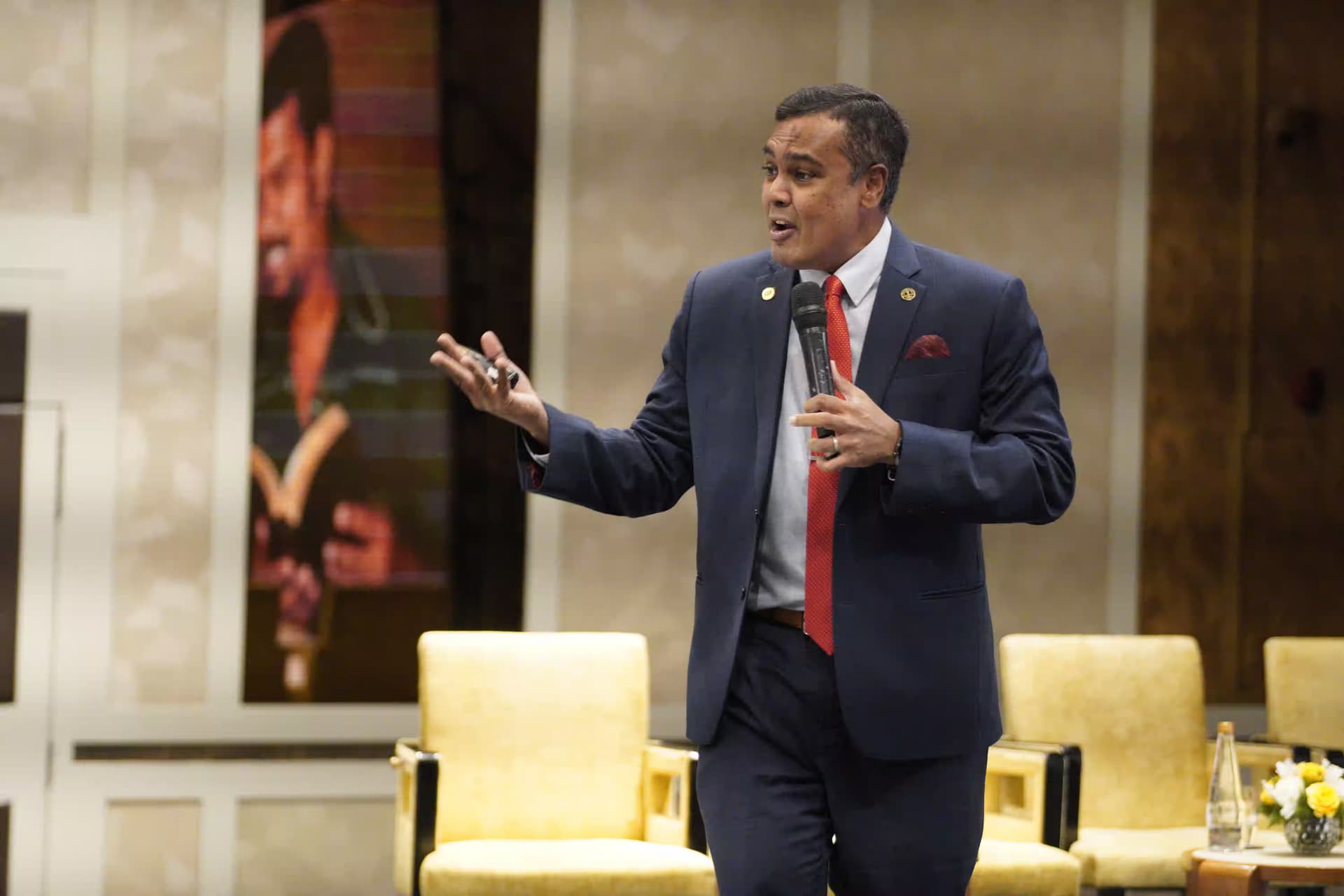
Effective corporate AI training goes far beyond tool tutorials. Dr Jerome Joseph designs AI training programmes that address three layers of capability: mindset, skill, and application.

Six pillars of corporate AI training programme by Dr Jerome Joseph Global Brand Academy Singapore
  • Mindset. Understanding how AI is reshaping industries, roles, and competitive landscapes. Building confidence and reducing fear around adoption

  • Core skills. Prompt engineering, output evaluation, AI-assisted decision making, and responsible AI use including data privacy and governance

  • Business application. Applying AI to your team's specific functions, from marketing and sales to leadership communication, customer experience, and brand strategy

  • Leadership integration. Helping senior leaders articulate an AI vision, model AI-forward behaviour, and build a culture where continuous learning is the norm

  • Measurement. Defining what AI capability looks like in your organisation and how to track meaningful progress over time

Your competitors are training their teams for AI. Are yours ready?

4. How to Choose the Right AI Training Provider in Singapore

The market is flooded with generic AI courses that teach tools without context and deliver certificates without capability. Here is what to look for when choosing a corporate AI training provider in Singapore.

  • The trainer has real business experience, not just technical knowledge

  • The programme is customised to your industry and your team's specific functions

  • Training goes beyond tools and addresses strategy, culture, and leadership

  • The provider can demonstrate measurable outcomes from previous programmes

  • The approach builds internal capability rather than dependency on the training provider

  • Follow-up support and a clear activation plan are included, not just a one-day session

5. What Results Organisations Achieve and How Quickly

Structured AI training produces results at different timescales. Setting realistic expectations helps leadership teams invest with confidence and measure progress accurately.

Area chart showing growing AI capability gap between trained and untrained organisations in Singapore over 12 months
  • Within 2 to 4 weeks. Increased confidence using AI tools, reduction in time spent on repetitive tasks, clearer team understanding of where AI adds value

  • Within 1 to 3 months. Measurable improvements in output quality and speed, stronger AI-informed decision making at team level

  • Within 3 to 6 months. AI embedded in standard workflows, leadership team articulating a clear AI strategy, early competitive advantages becoming visible

  • Within 6 to 12 months. Organisation-wide AI fluency, measurable productivity and performance gains, AI capability becoming a talent attraction differentiator

6. The Most Common Mistakes Companies Make When Rolling Out AI Training

Most AI training initiatives fail not because the technology is wrong but because the implementation is. These are the six mistakes Dr Jerome Joseph sees most consistently across organisations in Singapore and Asia.

  • Training only the technical team. AI fluency needs to reach every function, especially leadership, sales, marketing, and customer-facing teams

  • One-off sessions with no follow-up. Capability requires reinforcement. A single workshop produces awareness, not sustained skill

  • Ignoring the human side. Employees who feel threatened by AI disengage. Training must address fear and build psychological safety alongside skill

  • No clear business application. Generic AI training disconnected from real work challenges produces low transfer and poor ROI

  • Skipping leadership alignment. When senior leaders do not model AI adoption, the rest of the organisation takes it as a signal that it does not really matter

  • Measuring completion instead of capability. Course completion rates tell you nothing. Measuring actual behaviour change and business outcomes tells you everything

Final Thoughts

AI is not coming. It is already here and already widening the gap between organisations that have invested in their people and those that have not.

  • The question is not whether your organisation needs AI training. It is how much longer you can afford to wait

  • Tool access is now equal across competitors. Capability is where the advantage is built

  • Dr Jerome Joseph has trained leadership teams across 40 countries to use AI as an amplifier of human thinking, not a replacement for it

  • The organisations that will lead their industries in 2027 are building that capability right now

Related Posts