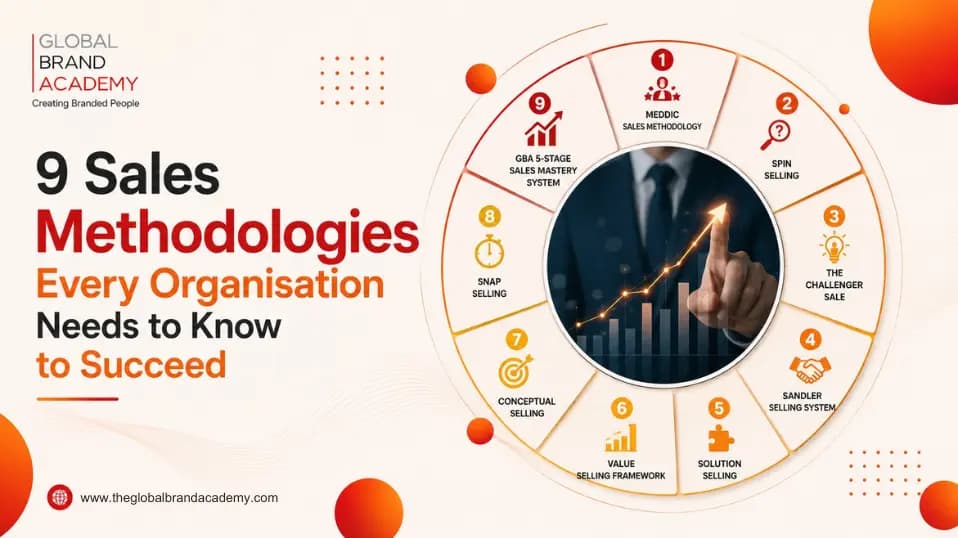
2. SPIN Selling
Context: Ideal for consultative selling (financial consultants, advisors, B2B solution sales).
Core Framework:
S – Situation: Ask background questions to understand context.
P – Problem: Uncover specific challenges the client faces.
I – Implication: Explore consequences of leaving problems unsolved.
N – Need-Payoff: Show the value of solving those problems.
Strengths: SPIN shifts selling away from product-pushing into collaborative problem solving.
GBA Application: We train participants to ask layered questions, practising roleplays where clients “open up” progressively—turning conversations into solution-focused dialogues.
3. The Challenger Sale
Context: Works best in industries where customers are overloaded with information and differentiation is key.
Core Principles:
Teach customers new insights.
Tailor conversations to stakeholder needs.
Take control of the sales process.
Strengths: Research shows Challengers outperform other profiles (Relationship Builders, Lone Wolves, etc.) by reframing customer thinking and leading decisively.
GBA Application: Our programs show reps how to present provocative insights that challenge conventional thinking, giving them confidence to lead conversations instead of just responding.
4. Sandler Selling System
Context: Effective in structured sales organisations and industries with high time-cost per lead.
Core Principles:
Establish upfront contracts (clear expectations).
Focus heavily on qualifying prospects.
Build open, trust-based dialogue.
Strengths: Helps reps avoid “happy ears”—false optimism in pipelines—and empowers them to disqualify early.
GBA Application: We coach sales teams to run “qualification drills,” using Sandler tools to avoid wasted cycles and focus on prospects truly aligned with their offering.
5. Solution Selling
Context: Perfect for complex, technical, or customised offerings.
Core Process:
Diagnose customer’s pain points.
Map solutions that address those pains directly.
Emphasise the business impact, not just features.
Strengths: Builds credibility by positioning the rep as a consultant, not a vendor.
GBA Application: In workshops, participants learn to reframe their pitches as diagnostic conversations, using customer pain maps to drive solution proposals.
6. Value Selling Framework
Context: Works best when buyers focus on ROI and financial justification.
Core Principles:
Translate features into business value.
Link value to measurable financial outcomes.
Speak in the buyer’s business language (cost savings, revenue growth).
Strengths: Particularly strong with C-level decision makers and procurement.
GBA Application: We train reps to calculate ROI scenarios, using value calculators and client case studies, helping them justify deals with evidence.
7. Conceptual Selling
Context: Useful for complex, multi-stakeholder sales cycles.
Core Approach:
Understand the buyer’s “concept” of the solution—not just surface needs.
Clarify how they define success.
Align your offering with their concept at every stage.
Strengths: Reduces misalignment and ensures both buyer and seller are on the same page.
GBA Application: We use Conceptual Selling exercises to help reps map buyer perspectives, ensuring pitches directly connect to how buyers see value.
8. SNAP Selling
Context: Designed for fast-moving environments where decision makers are busy and overloaded.
Core Framework:
S – Simple: Make every interaction easy.
N – iNvaluable: Be seen as a trusted resource.
A – Aligned: Fit solutions to customer objectives.
P – Priority: Match urgency with what matters most to the buyer.
Strengths: Helps reps cut through noise, stay concise, and close faster.
GBA Application: We run “time-starved buyer” simulations where participants practise concise value messaging under pressure.