Logo
Brand Transformation

The Consumer Buying Decision Process: 5 Stages Every Brand Must Understand

By Dr. Jerome Joseph
Published on July 11, 2026
The Consumer Buying Decision Process: 5 Stages Every Brand Must Understand

Nobody wakes up and buys something at random. Behind every purchase a coffee, a car, a corporate training program there's a path the buyer walked without even realising it.

That path is called the consumer buying decision process. And here's the uncomfortable truth for most brands: customers don't leave because your product is bad. They leave because your brand wasn't present at the right moment in that journey.

In this guide, we'll break down the five stages of the buying decision process, show you exactly where buyers drop off, and explain how your brand can influence each stage to win more customers.

What Is the Consumer Buying Decision Process?

The consumer buying decision process is the series of steps a person moves through from the moment they realise they have a need, to the moment they buy and beyond.

Marketers also call it the shopping decision process or simply the buying decision process. Whatever you call it, the idea is the same: buying isn't a single moment. It's a journey with distinct stages, and each stage is an opportunity for your brand to either win the customer or lose them to someone else.

Why Understanding Buying Decisions Matters

Most brands pour their entire budget into one stage usually the final push to buy. That's like sprinting the last 50 metres of a marathon and wondering why you lost.

When you understand the full process, three things change. You stop wasting spend on customers who aren't ready yet. You start showing up earlier, when buyers are still forming opinions. And you build trust before the competition even enters the conversation.

This is also where your brand's position becomes critical. If a customer is comparing options and can't tell what makes you different, you've already lost. That's why a clear brand position the specific space you own in the buyer's mind is the foundation everything else sits on.

Understand your buyer, and your brand sells itself. Let's build that clarity.

The 5 Stages of the Consumer Buying Decision Process

Stage 1 — Problem Recognition

Everything starts with a gap. The buyer realises something is missing, broken, or could be better. A company notices their sales team is underperforming. A professional feels invisible in their industry.

At this stage, the buyer isn't looking for you yet they're just becoming aware of a problem. Smart brands show up here with content that names the problem clearly, because whoever helps a buyer understand their problem usually earns the right to solve it.

Stage 2 — Information Search

Now the buyer starts looking. They search online, ask colleagues, read reviews, and scroll through options. This is the research phase, and it's where most brands are completely absent.

If your brand isn't visible when someone searches for a solution, you simply don't exist in their consideration set. Blogs, guides, case studies, and genuine expertise are what get you into the room.

Stage 3 — Evaluation of Alternatives

Here's where it gets competitive. The buyer now has a shortlist and starts comparing. Price, quality, reputation, trust everything is weighed.

This stage is won on differentiation, not volume. If three brands look identical to a buyer, they'll default to the cheapest or the most familiar. This is exactly why smart brands build a brand positioning map because if you can't articulate why you're different, the buyer won't do it for you.

Stage 4 — Purchase Decision

The buyer is ready. But even here, deals fall apart. A confusing checkout, an unclear price, a slow reply to a question, a bad review at the wrong moment any of these can kill a sale that was already won.

Remove friction. Make saying yes the easiest thing they do that day.

Stage 5 — Post-Purchase Behaviour

The process doesn't end at the sale. What the buyer feels afterwards decides whether they return, refer you, or regret it publicly.

This stage is often ignored, and it's the most expensive mistake in the list. A great post-purchase experience turns one buyer into a repeat customer and an advocate. A poor one turns them into a review that costs you ten future sales.

And remember your buyer doesn't experience your strategy, they experience your people. The person answering the query, running the demo, or following up after the sale is where your brand becomes real or falls apart. That's why structured corporate brand training matters so much: a team that truly understands the brand delivers the same confidence at every single stage of the buying journey.

What Actually Influences Buying Decisions

What Actually Influences Buying Decisions

Buying decisions look rational on the surface, but they're shaped by far more than price and features. Trust, familiarity, social proof, and emotion all pull at the buyer — often more strongly than logic does. A customer will pay more for a brand they recognise and believe in, and walk away from a cheaper option they feel unsure about. That's why the brands that win aren't always the cheapest or even the best — they're the ones the buyer feels most confident choosing. Understanding these hidden drivers is what separates guessing from selling.
Where Most Brands Lose the Buyer

Where Most Brands Lose the Buyer

The drop-off rarely happens at the checkout it happens much earlier, quietly, during research and comparison. A buyer searches for a solution, finds a competitor's guide instead of yours, and forms an opinion before you ever enter the conversation. By the time they're ready to buy, the shortlist is already set and you're not on it. The fix isn't a bigger ad budget. It's showing up earlier with real value, so that when the buyer starts comparing, your brand is already the familiar one.

Ready to turn buyer insight into real growth? Let's talk.

Common Mistakes Brands Make

Focusing only on the final stage. Most budgets go into closing the sale, while stages 1–3 are ignored which is exactly where buyers form their shortlist.

Assuming the process is linear. Buyers jump backwards, pause for weeks, and re-evaluate. Meet them wherever they are, not where you wish they were.

Being invisible during research. If a buyer searches for a solution and finds your competitor's guide instead of yours, the decision is halfway made without you.

Forgetting the customer after the sale. Post-purchase silence is how brands lose repeat business they already paid to earn.

Here's the part most brands miss: how your team behaves at every stage isn't accidental it's a reflection of leadership. The way leaders communicate, prioritise, and treat customers sets the standard everyone else copies. That's why understanding the different leadership styles and how they shape a team is directly tied to how well your brand performs in the buyer's journey. Get leadership right, and the buying process stops being something you hope works it becomes something you control.

About the Author

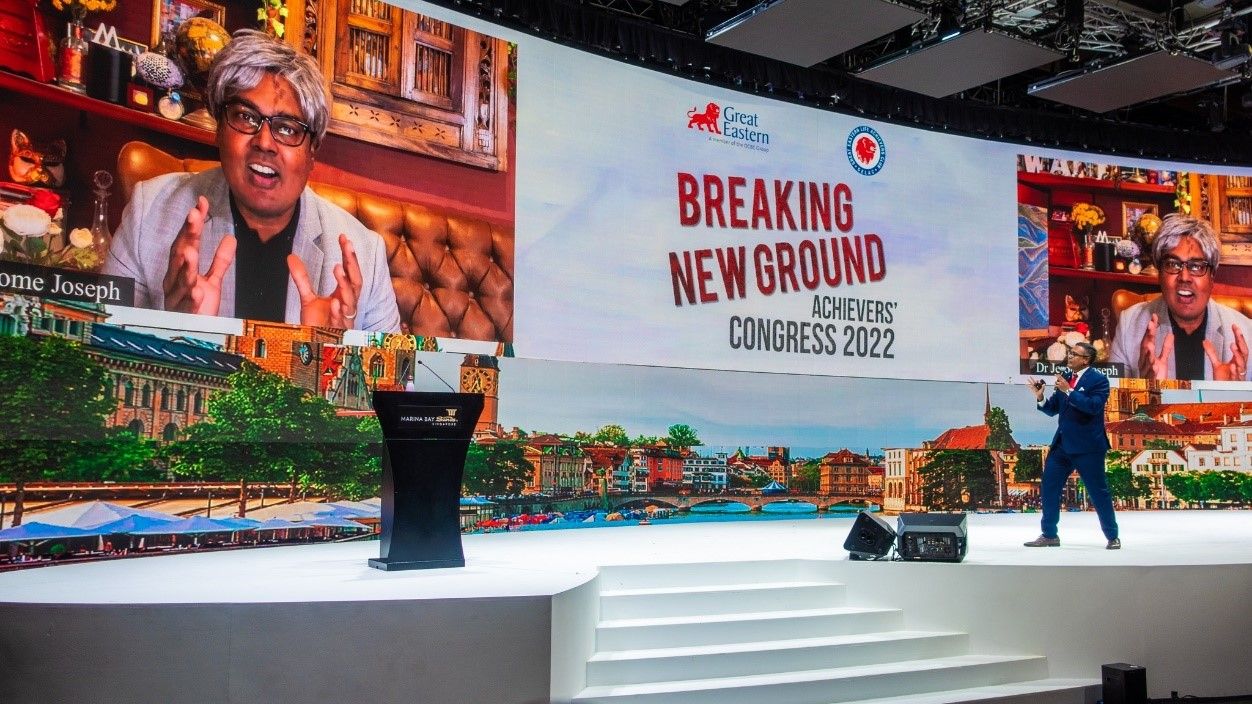
Dr Jerome Joseph is a globally recognised brand thought leader, keynote speaker, and strategic advisor with 30 years of experience across 40 countries and more than 1,000 brands. He is the author of 12 books on brand strategy, personal branding, and leadership, an inductee of the Asia Speaker Hall of Fame, a Global Speaking Fellow, and a Certified Speaking Professional. Dr Jerome Joseph has designed and delivered leadership development programmes for organisations across Singapore, Asia, and beyond, helping leaders identify their default styles, expand their behavioural range, and build teams that consistently outperform expectations.

Final Thoughts

The consumer buying decision process isn't complicated it's just consistently underestimated. Five stages, each one a moment where a buyer either moves closer to you or drifts toward someone else.

The brands that win aren't the loudest. They're the ones present at every stage: naming the problem, showing up in the search, standing out in the comparison, removing friction at the checkout, and staying valuable after the sale.

Map your buyer's journey honestly. Find the stage where you're absent. Fix that one first and watch how quickly the rest follows.

Related Posts