Logo
Brand Transformation

Corporate Brand Training vs On-the-Job Learning: What Actually Builds Stronger Teams?

By Dr. Jerome Joseph
Published on July 11, 2026
Corporate Brand Training vs On-the-Job Learning: What Actually Builds Stronger Teams?

Every growing company hits the same question sooner or later: how do we actually develop our people?

For some leaders, the answer is structured corporate brand training proper programs, workshops, and a clear path. For others, it's on-the-job learning let people learn by doing, in the real flow of work. Both camps have strong opinions, and both are partly right.

The truth is, the "better" method depends on what you're trying to build. In this guide, we'll compare corporate brand training and on-the-job learning honestly where each one wins, where each one falls short, and how the smartest companies combine the two to grow stronger, more aligned teams.

What Is Corporate Brand Training?

Corporate brand training is a structured program that teaches employees the skills, values, and behaviours that reflect your brand. It's intentional and planned think workshops, courses, immersion sessions, and guided learning led by experts.

The goal isn't just to teach a task. It's to make sure every person, from frontline staff to managers, understands what the brand stands for and delivers that consistently. When done well, corporate brand training turns a group of individuals into a team that feels and acts like one brand.

What Is On-the-Job Learning?

On-the-job learning is exactly what it sounds like employees learn by doing real work, in real time. There's no classroom. People pick up skills through daily tasks, watching colleagues, making mistakes, and figuring things out as they go.

It's fast, practical, and rooted in reality. New hires often learn more about how things actually work in their first month on the floor than in any manual. The downside? It can be inconsistent, and bad habits spread just as easily as good ones.

Why This Debate Actually Matters

This isn't just an HR question it's a brand question. How your people learn shapes how they show up for customers every single day. A team that's trained well but never applies it stays theoretical. A team that learns on the job but has no structure drifts in a hundred directions. Getting this balance right is one of the quiet decisions that separates strong brands from forgettable ones.

Want a team that lives your brand, not just knows it? It starts with the right training.

Corporate Brand Training vs On-the-Job Learning: Head to Head

Let's put both side by side on what matters most.

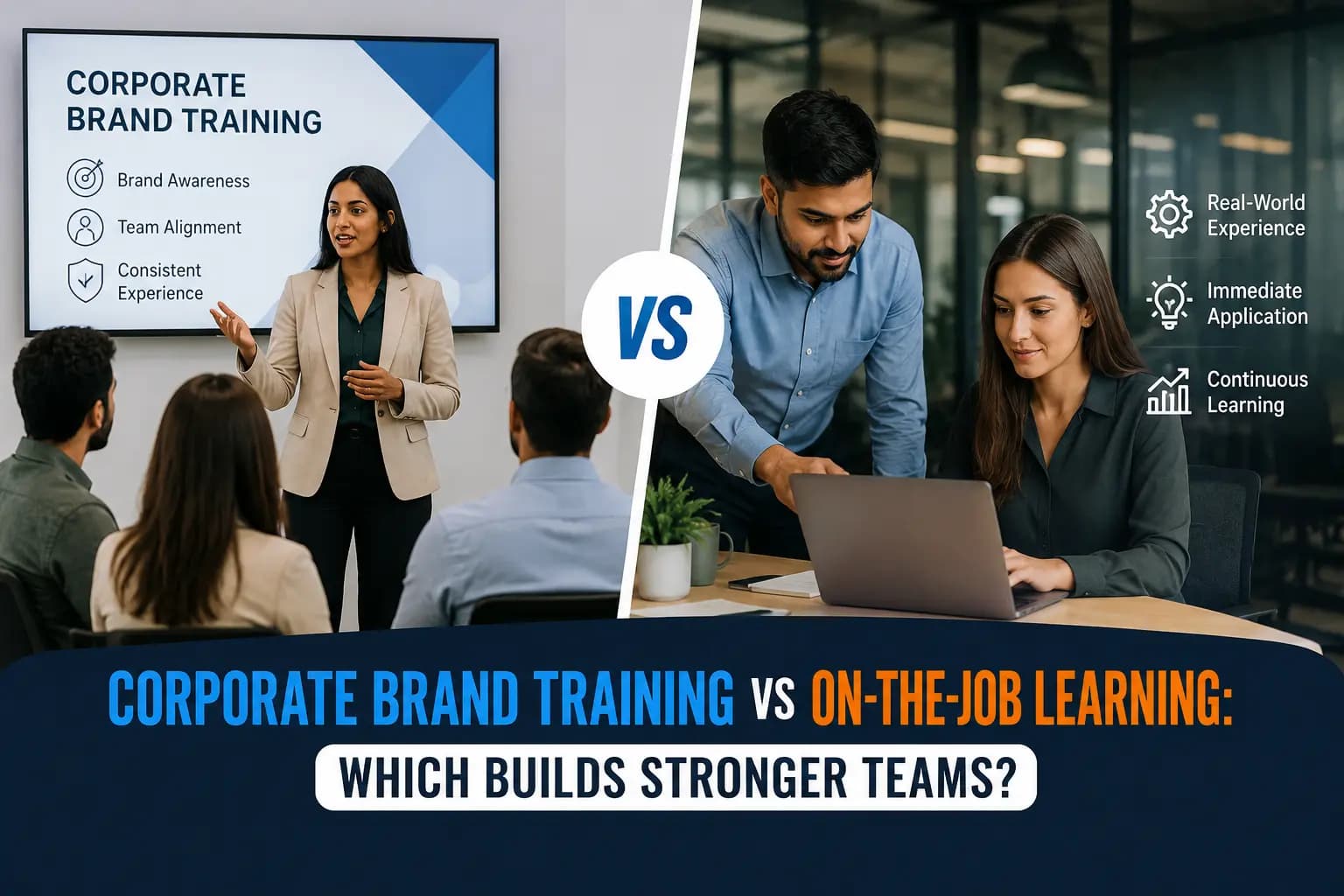
Consistency. Corporate brand training wins clearly. Everyone learns the same standards, so your brand feels the same whether a customer meets your team in Manchester. On-the-job learning, by contrast, varies from person to person and location to location.

Speed and cost. On-the-job learning wins here. There's little upfront investment people start contributing immediately. Structured training takes time and budget to design and deliver.

Depth and values. Corporate brand training wins again. Real brand behaviour, culture, and values are hard to absorb just by watching. They need to be taught intentionally, then reinforced.

Real-world application. On-the-job learning wins. There's no substitute for actually doing the work and dealing with real customers and real problems.

Notice the pattern? Neither one is the "loser." They're strong in different areas which is exactly why the smartest answer usually isn't either/or.

Where Corporate Brand Training Clearly Wins

If your priority is a consistent brand experience, corporate training is non-negotiable. It's the only reliable way to make sure every employee understands and delivers your brand promise the same way. This matters most when you're scaling, opening new locations, or when your brand reputation depends on a uniform experience.

It also matters at the leadership level. Strong teams are usually a reflection of strong leadership and structured training is how you pass down not just skills, but the mindset and values that leaders want their brand to stand for.

Where On-the-Job Learning Clearly Wins

For fast-moving roles, practical skills, and situations that change daily, on-the-job learning is unbeatable. It keeps people sharp, adaptable, and grounded in reality. It's also great for building confidence nothing teaches faster than doing the real thing and seeing the result.

The Real Answer: Blend Both, Don't Pick One

The Real Answer: Blend Both, Don't Pick One

The companies with the strongest teams stopped treating this as a competition long ago. They use corporate brand training to set the foundation the values, standards, and brand behaviour everyone must share and then let on-the-job learning sharpen those skills in the real world. Training gives direction; doing gives depth. When you combine them, employees don't just know your brand, they live it naturally in every customer interaction. That blend is what turns training from a one-time event into lasting growth.
How to Build a Training Approach That Actually Sticks

How to Build a Training Approach That Actually Sticks

Start with structured brand training so every new employee learns your values and standards from day one. Then pair each person with real projects and mentors so they apply what they learned immediately while it's fresh. Reinforce it with regular check-ins and refreshers, because skills fade without repetition. The key is intention: don't leave learning to chance, and don't lock it in a classroom either. A clear, blended plan is what separates teams that grow from teams that simply get by.

Not sure how to train your team the right way? Let's build a program that fits your brand.

Common Mistakes Companies Make

Even good intentions go wrong. Watch for these:

Choosing one and ignoring the other. Pure classroom training with no real application stays theoretical. Pure on-the-job learning with no structure creates chaos and inconsistency.

Treating training as a one-time event. A single onboarding workshop isn't enough. Brand behaviour needs reinforcement over time.

Skipping leadership involvement. If leaders don't model what's taught, employees won't take it seriously. Culture flows from the top.

No way to measure it. If you can't see whether learning is changing behaviour, you can't improve it. Track real outcomes, not just attendance.

About the Author

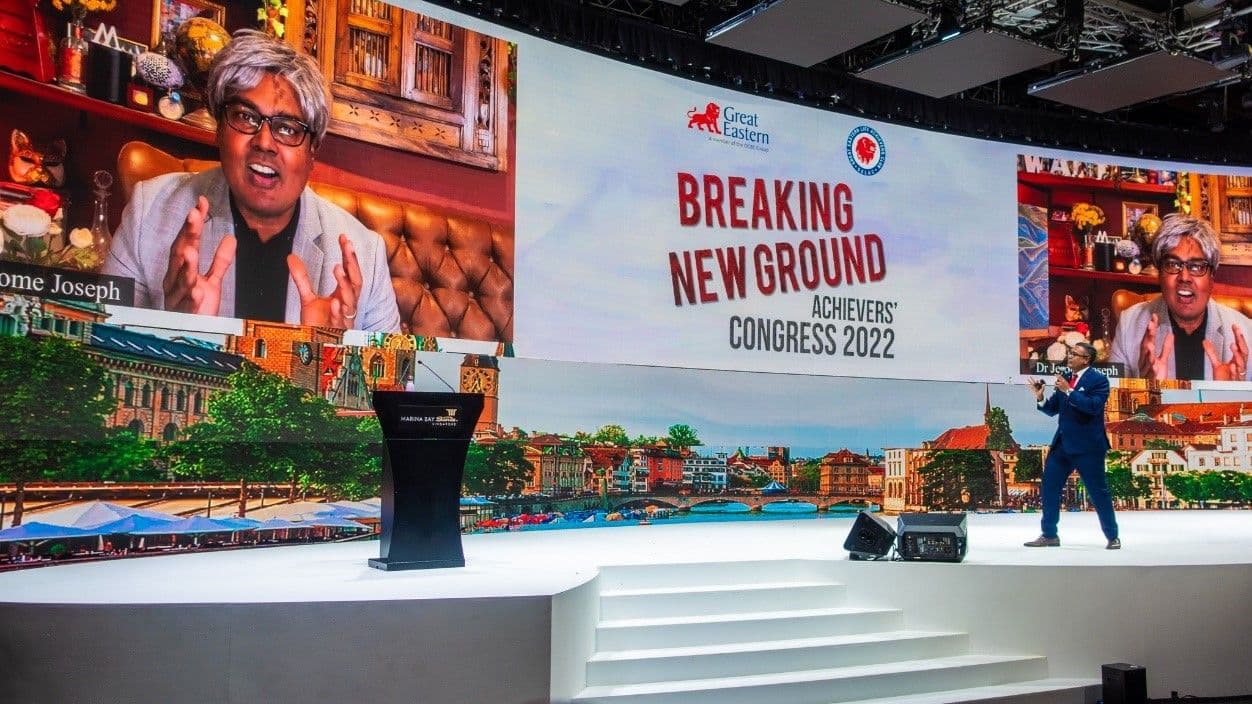
Dr Jerome Joseph is a globally recognised brand thought leader, keynote speaker, and strategic advisor with 30 years of experience across 40 countries and more than 1,000 brands. He is the author of 12 books on brand strategy, personal branding, and leadership, an inductee of the Asia Speaker Hall of Fame, a Global Speaking Fellow, and a Certified Speaking Professional. Dr Jerome Joseph has designed and delivered leadership development programmes for organisations across Singapore, Asia, and beyond, helping leaders identify their default styles, expand their behavioural range, and build teams that consistently outperform expectations.

Final Thoughts

Corporate brand training versus on-the-job learning was never really a fair fight because they were never meant to compete. One builds the foundation; the other builds the reflexes. The strongest teams use both, deliberately.

If you want your people to truly represent your brand consistently, confidently, and every single day start with a clear training plan and back it up with real-world practice. That combination is how good teams become great ones.

Related Posts