Brand development is a continuous process. Markets change, consumer expectations evolve, and competitors reposition. Regularly revisiting brand positioning maps helps brands identify new growth opportunities and avoid becoming irrelevant.
Updating brand perception maps ensures that the brand remains aligned with consumer expectations. Together, these tools allow brands to evolve intentionally rather than reactively.
Common Brand Strategy Mistakes
Many brands create a brand positioning map once and never revisit it. Others ignore brand perception data because it challenges internal assumptions. Some focus heavily on visibility without clarity, weakening the brand strategy framework.
Strong brands avoid these mistakes by continuously aligning strategy, perception, and execution.
Final Thoughts
A clear brand strategy framework provides the foundation for sustainable growth. Brand positioning maps define where a brand chooses to compete, while brand perception maps reveal how the market truly experiences it.
When used together, these tools transform brand strategy into a disciplined growth system. They strengthen brand awareness strategy, guide brand development, and ensure that growth is driven by relevance, clarity, and trust rather than noise or guesswork.
Frequently Asked Questions on Brand Strategy Framework, Positioning, and Perception
1. What is a brand strategy framework?
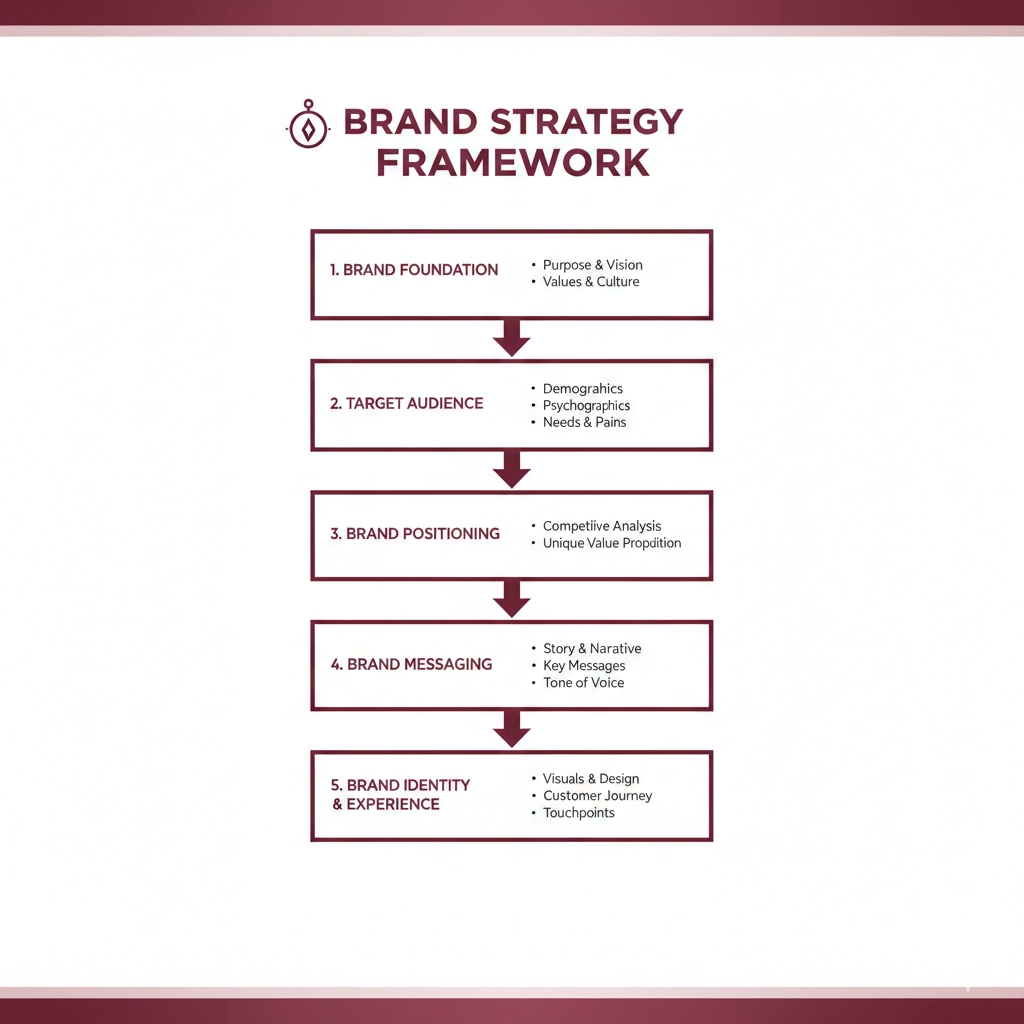
A brand strategy framework is a structured approach that defines how a brand is built, positioned, communicated, and evolved over time. It connects business objectives with customer expectations and market dynamics, ensuring that brand strategy, brand awareness strategy, and brand development work in alignment rather than in isolation.
2. How does brand strategy differ from brand development?
Brand strategy focuses on defining direction, positioning, and differentiation, while brand development is the ongoing execution and evolution of that strategy. Brand development includes adapting messaging, experience, and offerings as markets and consumer perceptions change, all guided by the brand strategy framework.
3. What is a brand positioning map?
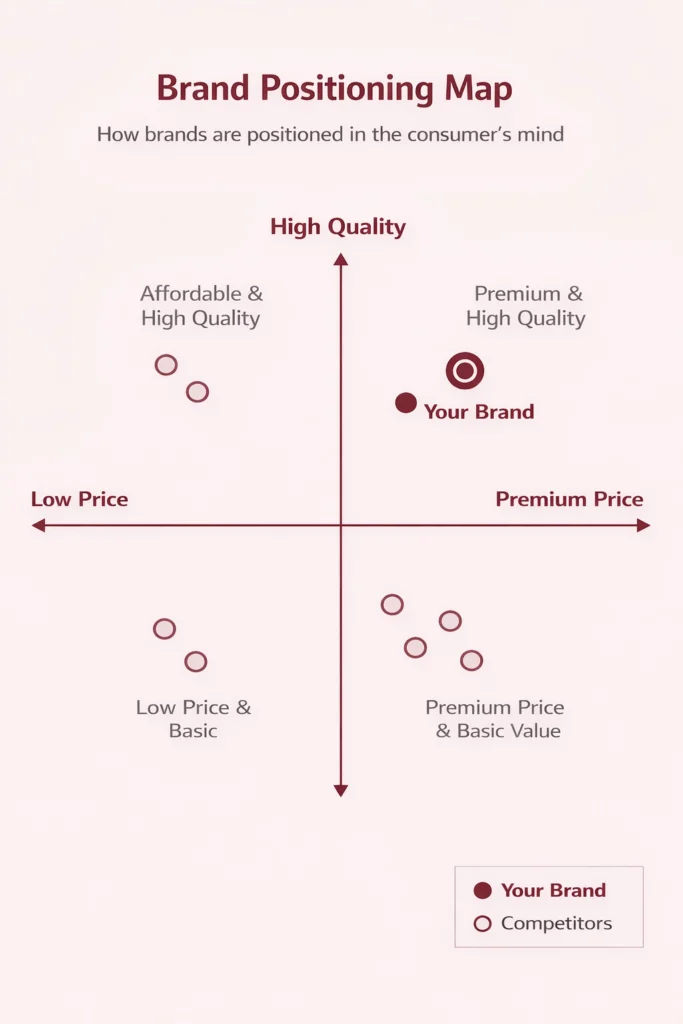
A brand positioning map is a visual tool that shows how brands in a category compare based on key attributes such as price, quality, innovation, or trust. It helps businesses identify competitive gaps, clarify differentiation, and decide where to position their brand within the market as part of a broader brand strategy.
4. What is a brand perception map?
A brand perception map reflects how consumers actually perceive a brand based on real data like surveys, reviews, and feedback. Unlike positioning maps, which represent strategic intent, brand perception maps reveal market reality and highlight gaps between desired and actual brand perception.
5. Why are both brand positioning maps and brand perception maps important?
Both tools serve different purposes within a brand strategy framework. Brand positioning maps define where the brand wants to compete, while brand perception maps show how the brand is currently experienced. Using both together helps brands identify misalignment and refine their brand strategy and brand awareness strategy.
6. How often should brands update their positioning and perception maps?
Brands should review their brand positioning map whenever there are major market shifts, competitive changes, or strategic pivots. Brand perception maps should be updated more frequently, as consumer sentiment can change quickly due to customer experience, communication, or cultural trends. Regular updates support consistent brand development.
7. How do these maps influence brand awareness strategy?
Positioning and perception maps guide brand awareness strategy by clarifying which attributes should be reinforced in communication. Instead of focusing on visibility alone, brands can ensure that awareness efforts build the right associations, improving recall, trust, and long-term preference.
8. Can small or emerging brands benefit from a brand strategy framework?
Yes, a brand strategy framework is especially valuable for small and growing brands. It provides clarity, focus, and consistency, helping them avoid scattered messaging and compete effectively against larger brands by owning a clear and differentiated position in the market.
9. What are common mistakes brands make with positioning and perception?
Common mistakes include relying only on internal assumptions, ignoring perception data that contradicts strategy, and failing to revisit maps over time. Another mistake is confusing high visibility with strong positioning, which can weaken brand strategy and slow brand development.
10. How do positioning and perception maps support long-term brand growth?
Positioning and perception maps help brands grow intentionally by aligning strategy with consumer reality. They enable smarter decisions, clearer communication, and stronger differentiation. Over time, this alignment builds trust, relevance, and equity, making brand growth more sustainable and resilient.

.webp "Brand Strategy: How Positioning Maps Shape Brand Growth")